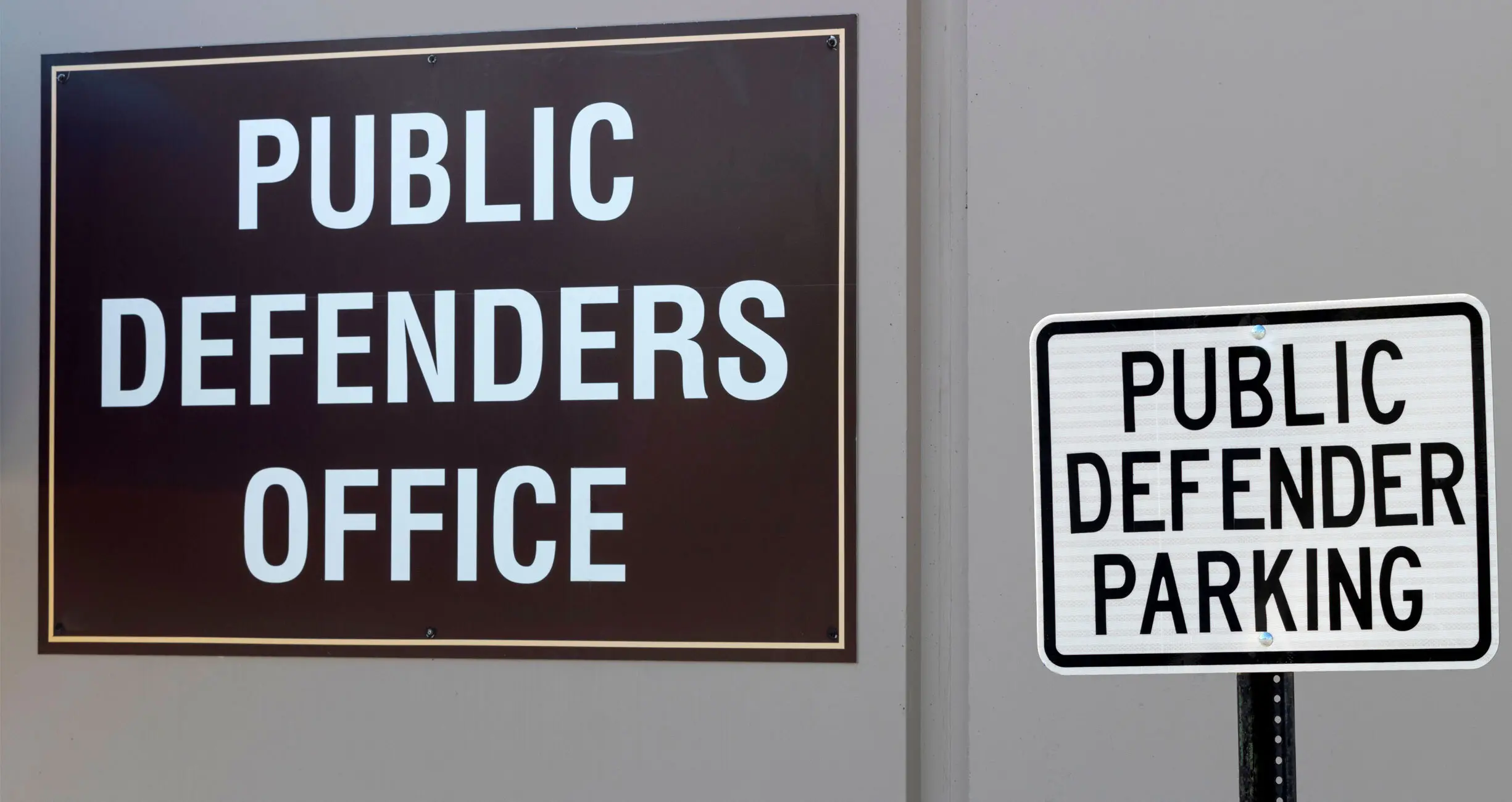
Public defense is often viewed as a last resort for individuals unable to afford private counsel. Despite this perception, it serves the core constitutional function of ensuring that access to justice does not depend on wealth. The Sixth Amendment guarantees the right to counsel, and public defenders are responsible for safeguarding that right through investigation, negotiation, and courtroom advocacy. In practice, however, many public defender systems in the United States are strained by chronic underfunding, excessive caseloads, and staffing shortages. These constraints limit the time and resources attorneys can devote to individual clients, which raises concerns about the quality of representation indigent defendants receive. While wealthier defendants can retain private counsel with greater capacity for investigation and strategy, indigent defendants often rely on overburdened attorneys operating under structural constraints.
This disparity raises constitutional concerns. Although states formally comply with the Sixth Amendment by appointing counsel, underfunding may prevent attorneys from providing the effective assistance the Constitution requires. This tension raises the central question of this paper—whether current public defense conditions amount to a failure to satisfy the Sixth Amendment's guarantee of meaningful representation.
This paper proceeds in four parts. It first examines the constitutional foundation of the right to counsel. It then explores the public defense crisis in the United States and comparative approaches abroad. The third section evaluates whether underfunding constitutes a Sixth Amendment violation. The final section reviews litigation and reform efforts as well as proposing policy solutions to strengthen indigent defense systems.
The Constitutional Right to Counsel
Origins of the Sixth Amendment
The Sixth Amendment is an essential safeguard for criminal defendants. It guarantees defendants the right to a speedy and public trial, an impartial jury, notice of the charges, confrontation of witnesses, compulsory process, and the assistance of counsel. These protections reflect the Framers' concern with preventing government overreach and ensuring a fair adversarial system in criminal prosecutions. The right to counsel is especially significant because criminal proceedings are complex and carry severe consequences, including imprisonment and lasting collateral harm. Legal representation helps ensure that defendants can understand their charges, navigate procedural rules, challenge evidence, and assert constitutional protections. Without counsel, individuals face the power of the state with little practical ability to defend themselves, which undermines the fairness of the process.
Understanding this purpose is essential to evaluating modern public defense systems. Although the Constitution guarantees counsel, the effectiveness of that guarantee depends on whether attorneys have sufficient time, resources, and capacity to provide meaningful representation. This distinction between formal appointment and functional adequacy is central to the constitutional question this paper addresses.
Key Supreme Court Cases
Modern Sixth Amendment doctrine has been shaped by three foundational cases that define both access to counsel and the quality of representation required.
In Gideon v. Wainwright (1963), the Supreme Court held that states are required to provide counsel to indigent defendants charged with serious offenses. Clarence Gideon, unable to afford an attorney, was forced to represent himself after Florida law denied him appointed counsel. The Court unanimously ruled that the right to counsel is fundamental to a fair trial and applies to the states through the Fourteenth Amendment. Gideon v. Wainwright established the principle that effective criminal adjudication cannot depend on a defendant's financial resources and transformed indigent defense into a constitutional obligation.
In Strickland v. Washington (1984), the Court defined the standard for ineffective assistance of counsel. The defendant argued that his attorney's failure to investigate mitigating evidence led to a harsher sentence. The Court established a two-part test requiring defendants to show both deficient performance and resulting prejudice that impacted sentencing. Strickland v. Washington clarified that the Sixth Amendment guarantees not only the presence of counsel, but performance that falls within an objective standard of reasonableness.
In United States v. Cronic (1984), the Court addressed circumstances in which prejudice may be presumed. The defendant's attorney had minimal time to prepare for a complex trial and limited criminal experience. While the Court generally required specific proof of attorney error, it recognized that certain conditions, such as the complete denial of counsel or situations preventing meaningful advocacy, may be so unfair that prejudice is assumed. United States v. Cronic is particularly relevant to modern public defense systems, where excessive caseloads and limited preparation time may effectively prevent attorneys from functioning as meaningful advocates.
Together, these cases establish the governing framework of the Sixth Amendment. Gideon v. Wainwright guarantees access to counsel, Strickland v. Washington requires that counsel be effective, and United States v. Cronic recognizes that systemic conditions may render effective representation impossible. This structure provides the foundation for evaluating whether chronic underfunding of public defense systems violates constitutional standards.
The Public Defender Crisis
Excessive Caseloads
One of the most significant challenges facing public defenders is the overwhelming number of cases assigned to each attorney. A review conducted by the American Bar Association found that public defenders in many jurisdictions average caseloads three times higher than the maximum recommended number of cases. As an attorney's caseload increases, they have less time to devote to individual clients, reducing their ability to investigate facts, communicate with defendants, and prepare effective legal strategies. These limitations raise concerns about whether indigent defendants are receiving the meaningful representation guaranteed by the Sixth Amendment.
A review conducted by the American Bar Association found that public defenders in many jurisdictions average caseloads three times higher than the maximum recommended number of cases.
Excessive caseloads also hinder attorneys' ability to thoroughly investigate cases. Public defenders handling hundreds of cases simultaneously often lack sufficient time to review discovery materials, analyze body camera footage, interview witnesses, and identify potential constitutional violations. As a result, critical evidence may be overlooked, and attorneys may be pressured to resolve cases through plea agreements rather than pursue more time intensive litigation. While plea bargaining is an important component of the criminal justice system, decisions driven by workload rather than case merits threaten the quality of representation provided to defendants.
Resource Deficiencies
In addition to excessive caseloads, many public defender offices operate with limited investigative and support resources. Investigators play a crucial role in verifying evidence, locating witnesses, and uncovering information that may strengthen a defendant's case. However, budget constraints frequently leave public defender offices with too few investigators to adequately support the volume of cases they handle. Consequently, potentially significant facts may go undiscovered, reducing the effectiveness of a defendant's legal representation.
Public defenders also face barriers to obtaining expert witnesses, whose testimony can be essential in cases involving forensic evidence, mental health issues, or technical subject matter. Unlike privately obtained counsel, public defenders often must seek judicial approval before obtaining expert assistance, creating additional procedural hurdles. When expert testimony is unavailable, defendants may be unable to effectively challenge the prosecution's evidence or present alternative interpretations of critical facts. This resource disparity can place indigent defendants at a substantial disadvantage throughout the trial process.
Another consequence of chronic underfunding is high attorney turnover. Public defenders generally earn significantly less than their counterparts in private practice, driving experienced attorneys to leave for better-paying positions. As a result, public defense offices frequently struggle to retain institutional knowledge and experienced litigators. Defendants are therefore more likely to be represented by less experienced attorneys who may still be developing the skills necessary to manage complex criminal cases effectively.
Comparative Perspectives
The shortcomings of the American public defense system become more apparent when compared with other countries that invest more heavily in indigent defense. Nations such as the United Kingdom and Norway generally treat publicly funded defense services as an essential counterpart to prosecution, providing greater institutional support and resources. By investing in both sides of the adversarial process, these systems seek to reduce coercive plea bargaining and prompt more fair outcomes. Although no criminal justice system is without flaws, these international approaches demonstrate that stronger public defense funding can help create a more balanced relationship between defendants and the state, highlighting the consequences of chronic underinvestment in the United States.
Does Underfunding Constitute a Sixth Amendment Violation?
Arguments that it Does
The chronic underfunding of public defense systems threatens to transform the Sixth Amendment's guarantee of counsel into a largely symbolic protection. Although indigent defendants are formally provided with legal representation, underfunding often results in excessive caseloads, inadequate investigative support, limited access to expert witnesses, and high attorney turnover. These deficiencies can significantly impair an attorney's ability to provide effective advocacy and devote adequate attention to each client. Consequently, a substantial disparity may emerge between the quality of representation available to indigent defendants and that available to defendants who can afford private counsel. When the right to counsel exists in theory but cannot be meaningfully exercised in practice, serious questions arise regarding whether states are fulfilling their constitutional obligations under the Sixth Amendment.
When the right to counsel exists in theory but cannot be meaningfully exercised in practice, serious questions arise regarding whether states are fulfilling their constitutional obligations under the Sixth Amendment.
Although courts generally require defendants to demonstrate specific deficiencies in representation under Strickland v. Washington, the Supreme Court recognized in United States v. Cronic that certain circumstances may be so likely to undermine effective advocacy that prejudice can be presumed. The Court acknowledged that the Sixth Amendment is violated when counsel performs inadequately and circumstances effectively prevent counsel from functioning as a meaningful advocate. This idea is applicable to public defense systems. In some jurisdictions, public defenders meet clients only briefly before hearings, sometimes with little opportunity to investigate the facts of the case, review evidence, or develop a defense strategy. While an attorney may be physically present, representation provided under such conditions may amount to a denial of counsel. When excessive caseloads and resource shortages leave attorneys unable to fulfill the basic functions of representation, the constitutional guarantee of counsel risks becoming a formality rather than a safeguard.
The consequences of underfunded public defense systems extend beyond the Sixth Amendment and implicate broader concerns under the Fourteenth Amendment's Due Process Clause. Due process requires that criminal proceedings be fundamentally fair and that defendants receive a meaningful opportunity to defend themselves against the power of the state. However, fairness is difficult to achieve when indigent defendants are represented by attorneys who lack sufficient time and resources to adequately prepare their cases. The resulting disparity between publicly funded and privately retained counsel can undermine confidence in the legitimacy of criminal proceedings and create unequal access to justice based on financial status. Because the criminal justice system depends upon both procedural fairness and meaningful advocacy, chronic underfunding of public defense systems raises concerns about the fundamental fairness that due process is intended to protect.
Counterarguments
The main argument against the idea that underfunding constitutes a Sixth Amendment violation is that defendants receive lawyers, which therefore fulfills the obligation to provide counsel to everyone. While technically the Courts fulfill the technical obligation to appoint legal counsel to indigent defendants, there are systematic inequalities in the quality of legal counsel. This undermines the purpose of the Sixth Amendment, which, as stated previously, was to ensure that defendants were able to effectively navigate the criminal justice system and ensure their rights were being protected. Therefore, while it may formally fulfill the requirements guaranteed by the Sixth Amendment, it undermines the original purpose.
Despite the significant challenges facing public defender systems, courts have generally been reluctant to hold that underfunding alone constitutes a Sixth Amendment violation. This is primarily due to the standard established in Strickland v. Washington. The requirement to demonstrate that counsel's performance is deficient and that the deficiency prejudiced the outcome of the case places a substantial burden on defendants because proving that a different outcome would have occurred in the absence of counsel's errors is difficult. As a result, systematic issues such as excessive caseloads, inadequate funding, or limited investigative resources may not be sufficient to establish a constitutional violation without clear evidence of harm.
Reform Efforts and Proposed Policy Solutions
Recent litigation has highlighted the growing concerns surrounding underfunded public defense systems. In several states, including Louisiana and New York, lawsuits have alleged that excessive caseloads and inadequate resources prevent public defenders from providing constitutionally adequate representation. Although courts have been hesitant to broadly declare underfunding a Sixth Amendment violation, these cases have increased public scrutiny regarding public defense funding and prompted reforms in some jurisdictions.
However, litigation alone is unlikely to resolve the structural problems facing public defense systems. Meaningful reform requires legislative action aimed at ensuring that indigent defendants receive effective representation. One potential solution is the adoption of enforceable caseload limits that prevent attorneys from accepting more cases than they can competently manage. Such limits would allow public defenders to devote adequate time to investigation, client communication, and trial preparation.
States should also increase funding for public defender offices to improve access to investigators, expert witnesses, and support staff. Because prosecutors often have far greater institutional resources at their disposal, providing comparable resources to defense counsel would help restore balance to the adversarial process. In addition, increased funding could improve attorney retention by offering more competitive salaries, reducing turnover and preserving institutional expertise within defender offices.
Finally, states should establish independent oversight bodies to monitor caseloads, resource allocation, and compliance with constitutional standards. Greater oversight would help ensure that public defense systems remain accountable and capable of providing meaningful representation. While no single reform can fully resolve the challenges facing indigent defense, these measures would move states closer to fulfilling the constitutional promise established by the Sixth Amendment.
Conclusion
The Sixth Amendment guarantees more than the mere appointment of an attorney; it guarantees meaningful legal representation. While Gideon v. Wainwright, Strickland v. Washington, and United States v. Cronic establish different aspects of the right to counsel, each recognizes that fairness in criminal proceedings depends on effective advocacy. Chronic underfunding of public defender systems creates excessive caseloads, resource shortages, and structural barriers that threaten this constitutional guarantee. Although courts have often been reluctant to find systemic Sixth Amendment violations, the realities of modern public defense raise serious concerns about whether indigent defendants receive the representation the Constitution requires. Ensuring adequate funding for public defense is therefore not merely a policy preference but a constitutional imperative.